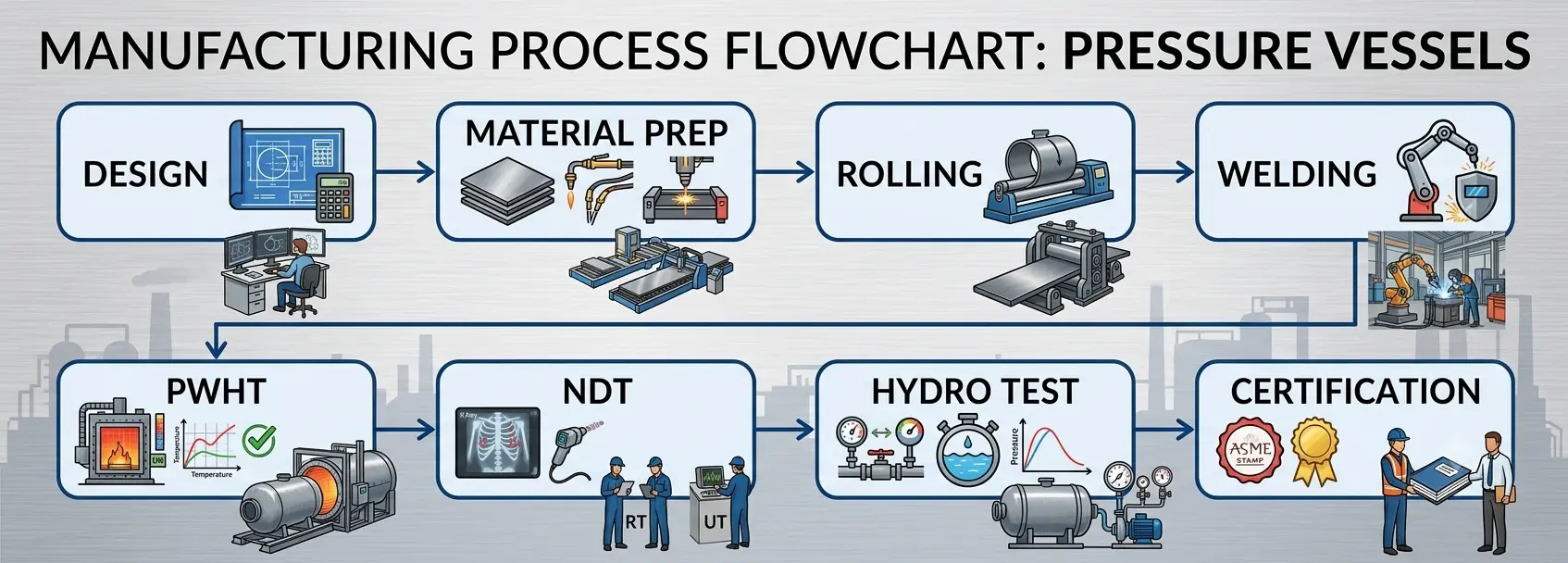
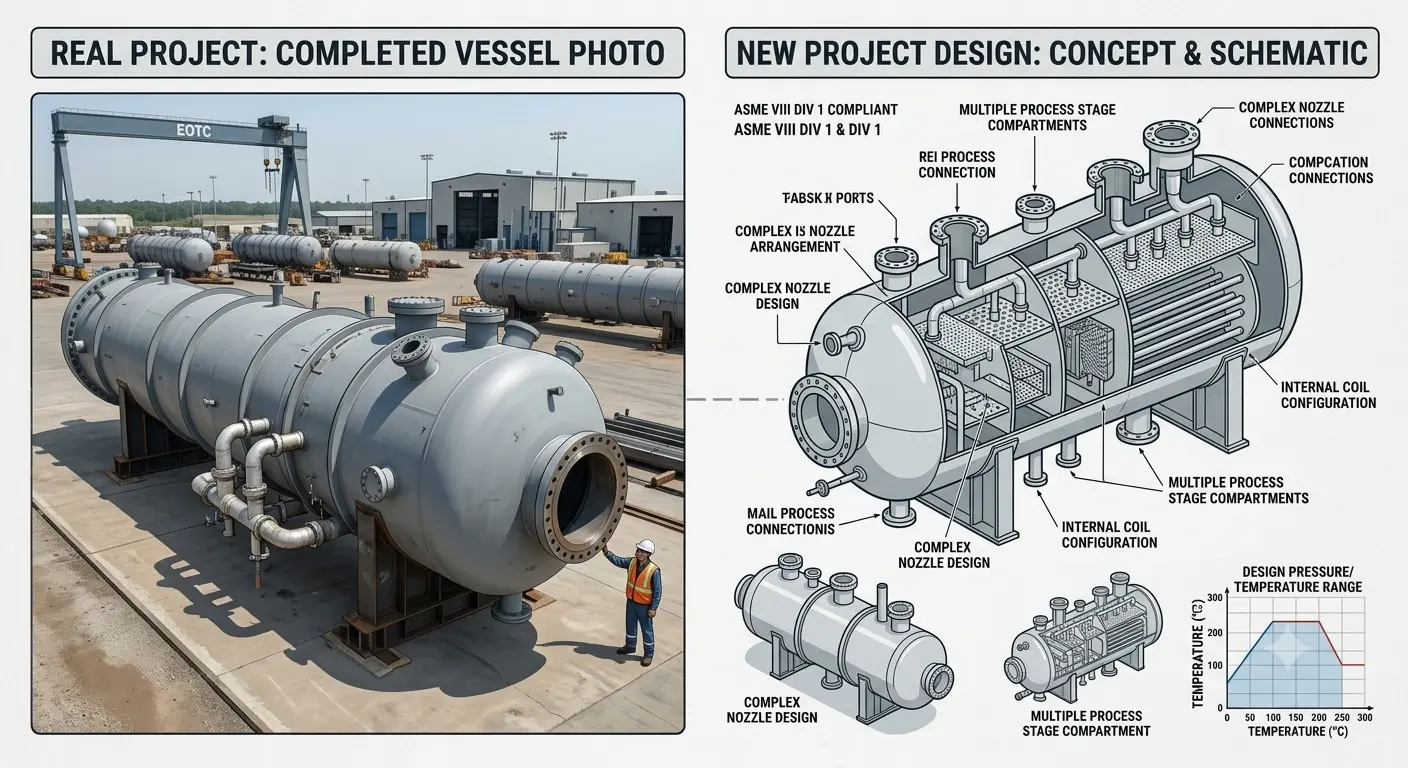
pressure vessels is a sturdy, specially constructed vessel intended to hold gases or liquids at pressures far higher than those permitted by normal atmospheric conditions. Each unit is constructed to withstand extreme internal pressure and temperature fluctuations without losing structural strength since it is made of high-strength materials like carbon steel, stainless steel, and corrosion-resistant alloys. Pressure vessels are the stable foundation that maintains industrial operations uninterrupted in industries where downtime is measured in weeks rather than hours and where equipment failure can pose serious safety risks.
At United Cooling Systems Pvt. Ltd. , we create the trust that keeps entire facilities operating, not simply pressure vessels. Every vessel is built in accordance with globally accepted standards, such as ASME, PED, and IS certifications; it is designed to endure harsh operating circumstances; and industry leaders in India and abroad rely on it.
From oil and gas extraction to chemical processing, pharmaceutical manufacturing, power generation, and food production, your equipment simply cannot afford to fail. We understand responsibility — and it shows in every weld we make, every test we run, and every vessel we deliver.
Types of Pressure Vessels
Not every application calls for the same vessel design. Choosing the right type is the first decision in getting a safe, efficient installation.
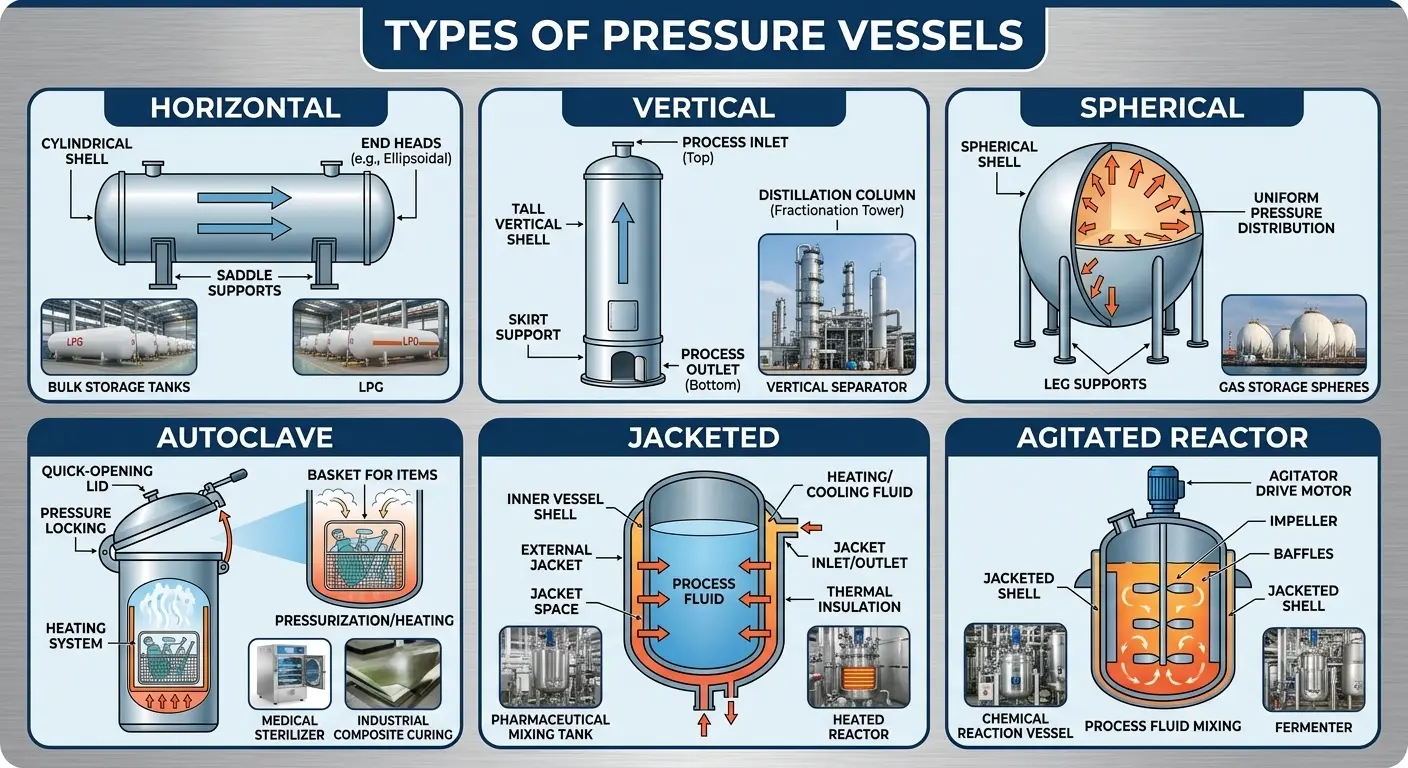
- Horizontal Pressure Vessels—Mounted on saddle supports, ideal where floor space is limited but length is available. Common in storage and separation applications in oil and gas processing.
- Vertical Pressure Vessels—Stand upright on skirt or leg supports, used where footprint matters more than length—common in reactors, columns, and knockout drums.
- Spherical Pressure Vessels—Distribute stress evenly across the shell, making them the preferred choice for very high-pressure gas storage such as LPG and ammonia.
- Autoclave Vessels—Sealed chambers used for sterilization, curing, and high-temperature/high-pressure processing in pharmaceuticals, composites manufacturing, and food processing.
- Jacketed Vessels—Feature an outer shell for heating or cooling the contents, widely used in chemical reaction and mixing processes.
- Agitated Vessels/Reactors—Built with internal mixing mechanisms for controlled chemical reactions under pressure.
The right choice depends on your operating pressure, temperature, available footprint, and the fluid or gas being contained. Our engineering team helps you select—and design—the configuration that fits your process, not the other way around.