

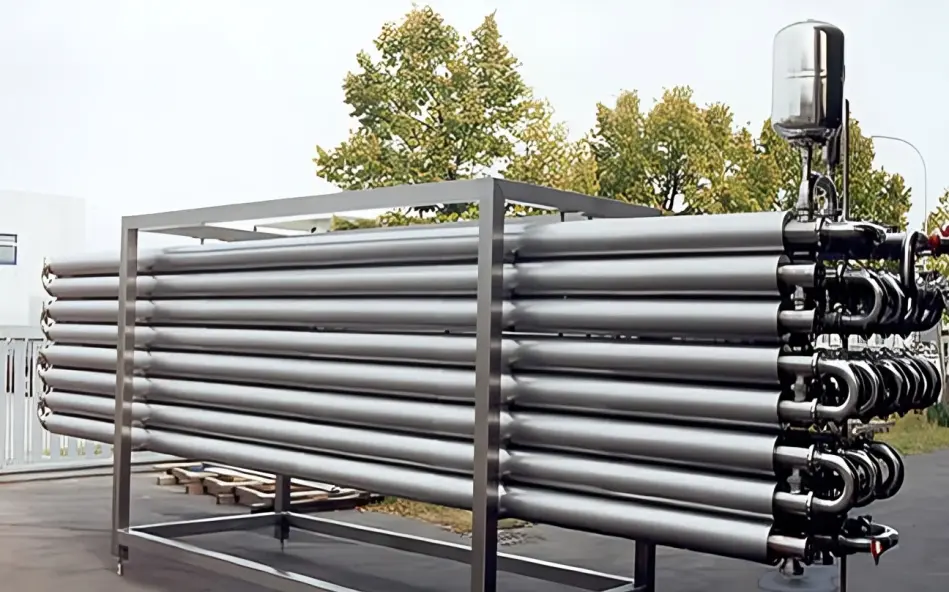
Double Pipe Heat Exchanger
The Double Pipe Heat Exchanger is a game-changer for anyone looking for a reliable and compact heat transfer solution. With its two concentric pipes—one carrying hot fluid and the other carrying cold fluid—this system efficiently transfers heat without mixing the fluids. It’s a simple yet powerful choice for industries like HVAC, chemical processing, food production, and more.
What Makes the Double Pipe Heat Exchanger So Effective?

Two Pipes, Endless Potential
At its core, the Double Pipe Heat Exchanger is designed with simplicity and reliability. The hot fluid flows through the inner pipe, while the cooler fluid circulates through the outer pipe. Heat is transferred through the pipe walls, ensuring efficient thermal exchange without the two fluids ever coming into direct contact. This makes it the ideal choice for applications where heat transfer efficiency and space-saving design are critical.
How Does It Work? The Science Behind the Design
Efficient Heat Exchange in Two Simple Steps
In the double-pipe heat exchanger, one fluid is heated in the inner pipe, while the other is cooled in the outer pipe. Heat travels from the hot fluid to the cold fluid through the pipe walls, which allows the fluids to remain separate. Depending on the configuration, there are two ways the fluids flow:
- Counterflow (Optimal Efficiency): Fluids flow in opposite directions. This configuration maintains the maximum temperature gradient across the heat exchanger, ensuring the most efficient heat transfer.
- Parallel Flow (Simplicity in Design): Fluids flow in the same direction. Though less efficient than counterflow, it’s perfect for smaller or simpler applications where efficiency is secondary.
The Power of the Double Pipe Heat Exchanger: Key Features
- Compact, Space-Saving Design: The simple two-pipe design makes it ideal for installations where space is limited.
- Energy-Efficient Performance: By maximizing heat transfer, these exchangers reduce energy consumption and improve system performance.
- Versatility Across Industries: From liquid to gas, this heat exchanger is compatible with a wide range of fluids and applications.
- Low Maintenance: With fewer parts and a simple structure, the double-pipe heat exchanger is easy to maintain and clean.
- Cost-Effective: A low-cost heat exchanger that doesn’t sacrifice performance for affordability.
Where Can You Use a Double Pipe Heat Exchanger?
Industries and Applications That Benefit from Double Pipe Technology
The double-pipe heat exchanger has a broad range of applications, and its simplicity makes it ideal for many industries:
- HVAC Systems: Control indoor climates with optimal temperature regulation, whether heating or cooling air.
- Chemical & Pharmaceutical Processing: Efficiently regulate temperatures in reactors and tanks.
- Food & Beverage Industry: Use it in pasteurization or cooling systems to maintain quality.
- Automotive Industry: Perfect for engine cooling systems, transmission oil coolers, and more.
- Power Plants: Essential for heat transfer in turbines and cooling systems.
- Water Treatment: Regulate temperature for water filtration and processing.
Why Choose a Double Pipe Heat Exchanger?
The Benefits of Going with the Classic Design
- Efficient Heat Transfer: Even with its simple design, the Double Pipe Heat Exchanger excels in transferring heat, especially in counterflow configurations.
- Space-Saving: Its compact structure makes it ideal for environments where space is a premium.
- Affordable & Reliable: A cost-effective heat transfer solution without sacrificing durability or performance.
- Versatile and Adaptable: Suitable for a range of industries and fluid types, from liquids to gases.
Maintenance Tips for Long-Term Success
Keep your heating exchanger running smoothly.
For optimal performance and longevity, regular maintenance is crucial:
- Clean Regularly: Periodically clean the inner and outer pipes to remove fouling or buildup that could reduce heat transfer efficiency.
- Monitor Flow Rates: Ensure that both fluids are flowing at the correct rates to maintain optimal heat exchange.
- Check for Leaks: Inspect the pipes for leaks, and repair them immediately to prevent loss of fluid and performance.
- Temperature Monitoring: Regularly check the temperature difference between the fluids to ensure effective heat transfer.
Conclusion: A Simple Yet Powerful Heat Transfer Solution
The double-pipe heat exchanger offers a reliable, efficient, and cost-effective solution for your heat transfer needs. Its compact design, high heat transfer efficiency, and versatility make it an excellent choice for a wide range of industries. Whether you're looking for a solution for your HVAC system, chemical plant, or food processing facility, this heat exchanger delivers consistent and efficient performance.
Contact Us for a Custom Quote
Frequently Asked Questions (FAQ)
1. What is a double-pipe heat exchanger?
A double-pipe heat exchanger is a heat transfer device that uses two concentric pipes: one for the hot fluid and the other for the cold fluid. Heat is transferred between the two fluids through the pipe walls, allowing for efficient thermal exchange without them mixing.
2. How does the double-pipe heat exchanger work?
The hot fluid flows through the inner pipe, while the cold fluid flows around the outer pipe. Heat transfers from the hot fluid to the cold fluid via the pipe walls, depending on the direction of the flow (counterflow or parallel).
3. What are the benefits of using a double-pipe heat exchanger?
- Compact design for space-saving installations.
- Highly efficient heat transfer.
- Its versatility and adaptability make it suitable for a wide range of industries.
- Low maintenance and cost-effective.
4. What industries use double-pipe heat exchangers?
Double-pipe heat exchangers are used in a variety of industries, including HVAC, chemical processing, food and beverage, automotive, and power generation, among others.
5. What is the difference between counterflow and parallel flow?
- Counterflow: Fluids flow in opposite directions, providing the most efficient heat transfer.
- Parallel Flow: Fluids flow in the same direction, making it a simpler design but less efficient compared to counterflow.
6. How do I maintain my double-pipe heat exchanger?
Regular cleaning, monitoring flow rates, checking for leaks, and ensuring proper temperature differentials will keep your heat exchanger operating efficiently.


