In process industries, Air Cooled Heat Exchangers (ACHEs) often operate behind the scenes — until they underperform. At that point, inefficiency isn’t just a technical problem; it becomes a cost problem, an energy problem, and often, a reliability problem.
But the top-performing operations don’t just install and forget their ACHEs — they engineer for maximum efficiency, and then they maintain it. Here’s what they do differently.
1. They Don’t Oversize “Just in Case”
Oversizing a heat exchanger may seem like a safe bet — more surface area, more capacity, right? Not always.
Top performers size to the load. They consider:
- Actual thermal duty, not theoretical maximums
- Airflow limitations based on elevation and climate
- Fin effectiveness vs. diminishing returns
Oversizing increases capital costs, fan energy consumption, and maintenance. Proper sizing balances performance with lifecycle cost.
2. They Use Smart Fan Control Systems
A single-speed fan is outdated. Leading operators deploy:
- Variable Frequency Drives (VFDs) for fan motors
- Temperature-based fan speed automation
- Night mode or seasonal profiles to cut energy use
This adaptive airflow control significantly reduces power draw — especially in cooler climates or at night.
3. They Optimize Airflow and Placement
Air doesn’t move on paper like it does in the field. The best-performing setups account for:
- Prevailing wind direction and wind recirculation
- Stack effect in multi-fan arrays
- Elevation and density of incoming air
They avoid placing units near walls or in clusters that cause hot air to re-enter the intake. Proper clearance and elevation matter.
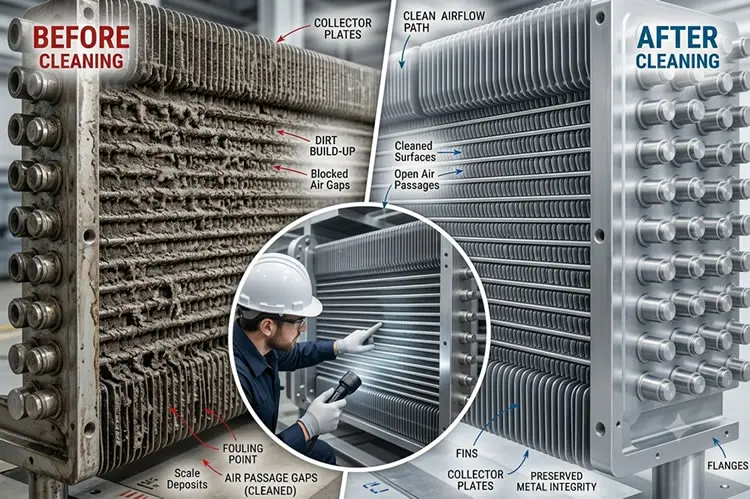
4. They Maintain Clean Surfaces — Religiously
Dirty fins kill performance. Just 1 mm of debris or fouling can cut efficiency by up to 20%.
Top teams:
- Inspect fins on a schedule, not just when there's a problem
- Use high-pressure air or water to clean without damaging
- Apply fin coatings or anti-fouling treatments where needed
Clean surfaces = better heat transfer = lower fan speeds and energy usage.
5. They Monitor Performance — and Act on the Data
ACHEs are often left unmonitored. Top performers know better.
They install:
- Temperature sensors on inlet/outlet and ambient
- Differential pressure sensors across the bundle
- Energy meters on fan drives
Data is logged, compared to baseline, and analyzed for early signs of fouling, fan failure, or performance drift.
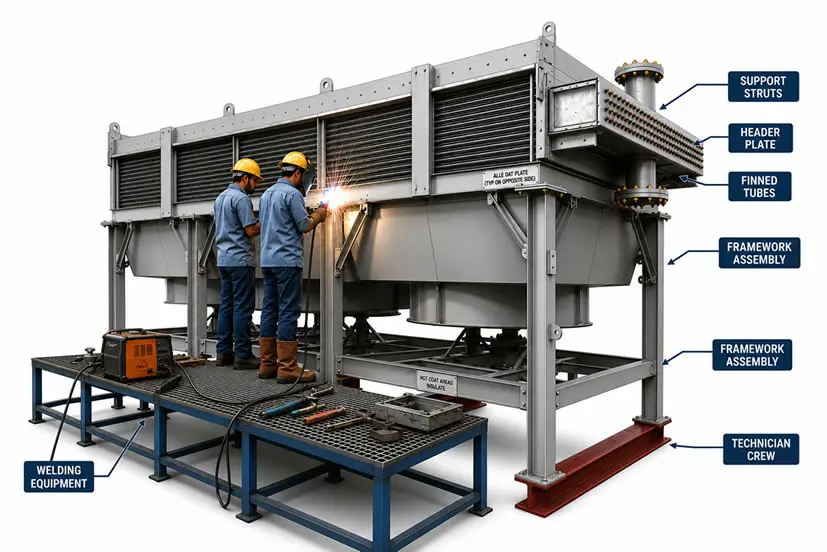
6. They Design for Easy Maintenance
If a unit is hard to clean or inspect, it won’t get cleaned or inspected as often. Simple as that.
High-efficiency operations prioritize:
- Walkways and ladders for access
- Slide-out bundles or removable panels
- Drain and vent valves placed for convenience
Efficiency isn’t just technical — it’s logistical.
7. They Work With Their Manufacturer, Not Against Them
Finally, top performers understand that efficiency starts at the design table. They don’t just send out a spec and hope for the best.
They collaborate with their ACHE manufacturer to:
- Fine-tune for process conditions
- Optimize tube geometry, fin density, and fan curve
- Customize for airflow conditions and plant layout